Coming Soon!, we are working on this site

AI & Humanoid Robots

"We marveled at our own magnificence... "
Tesla: Optimus, Boston Dynamics: Atlas, Agility Robotics: Digit, Engineered Arts: Ameca, Figure: Figure 2, Unitree Robotics: G1 Robot, Sanctuary AI: Sanctuary Robot, Fourier: Fourier Robot, Nreal: CyberOne, Neura Robotics: Neura Robot, Agibot: Agibot Yuanzheng A2, Kepler Exploration: Kepler Robot, UBTech Robotics: S1 Walker Robot, Engineai Robotics: Engineai SE01 Robot Xpeng Robotics: Xpeng Iron Robot

Tesla Robot
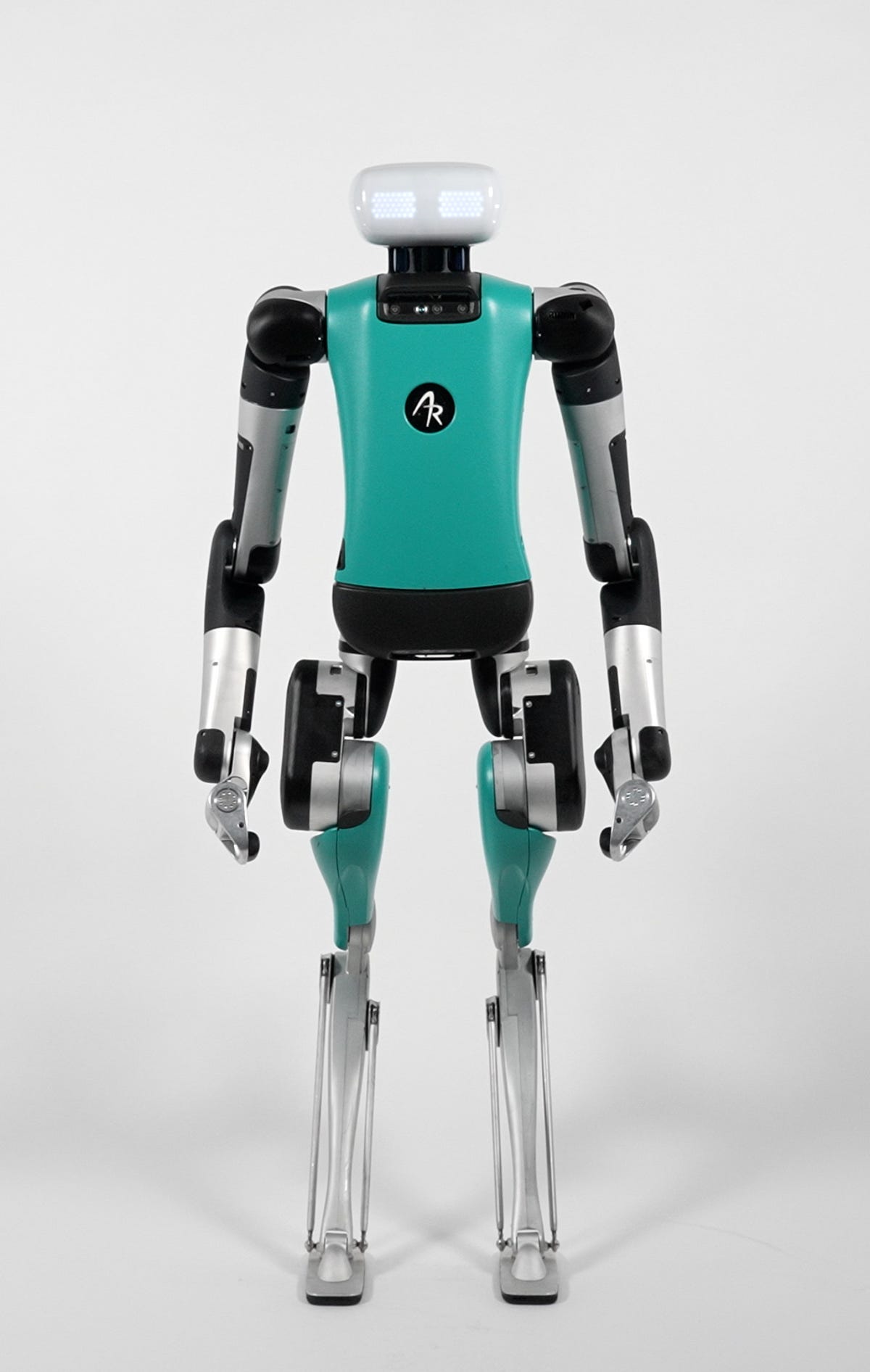
Tesla - Optimus Robot
The Tesla Optimus Robot represents a significant leap in humanoid robotics, designed to assist with a wide range of tasks in various environments. Its advanced AI enables it to learn and adapt, making it a versatile tool for both industrial and domestic applications. With the ability to safely interact with humans, Optimus is engineered to enhance productivity while ensuring safety. It is equipped with sophisticated sensors that provide real-time feedback, enabling it to navigate complex environments effectively. The robot’s energy-efficient design allows for sustained operation throughout the day, making it a reliable asset in any setting. By integrating cutting-edge technology, Tesla aims to create a robot that can seamlessly integrate into daily life, revolutionizing the way we approach work and assistance.

Height: 173 cm
Weight: 56.7 kg
Speed: 8 km/h
Payload: 20.4 kg
Degrees of freedom: 28
Autonomy Level: Semi-autonomous, using Tesla's Full Self-Driving technology

Motors: Custom-designed actuators
Battery: 2.3 kWh
Runtime: Optimized for a full day of work
Cameras: Multiple vision cameras
Sensors: Balance, navigation, and object detection sensors
Software: Tesla Full Self-Driving AI system
Safety: Collision avoidance, emergency stop
Material: Lightweight alloy and composite materials

Figure Robot
Figure - Figure 2 Robot
Figure 2 represents a major advancement in humanoid robotics, designed for versatility and efficiency across various sectors. Its sophisticated AI enables understanding and execution of verbal commands, facilitating seamless human-robot interaction. Equipped with an advanced vision system, the robot can accurately identify and manipulate objects, essential for tasks in dynamic environments like healthcare and logistics. The articulated joints provide a wide range of movements, allowing it to navigate complex spaces with ease. Additionally, Figure 2 employs machine learning algorithms to adapt its performance over time, improving its ability to handle new challenges. As a platform for research and development in humanoid robotics, Figure 2 illustrates how automation can enhance human productivity. With an intuitive interface and cutting-edge features, it positions itself as a valuable tool for optimizing efficiency, paving the way for a future where humans and robots collaborate effectively.

Height: 180 cm
Weight: 70 kg
Speed: 6 km/h
Payload: 15 kg
Degrees of freedom: 22
Autonomy Level: Semi-autonomous with AI capabilities

Motors: High-torque electric motors
Battery: 2 kWh lithium-ion
Runtime: 8 hours per charge
Cameras: Dual stereo cameras
Sensors: LIDAR, ultrasonic, and tactile sensors
Software: Proprietary AI and machine learning algorithms
Safety: Emergency stop and obstacle detection
Material: Lightweight composites and alloys

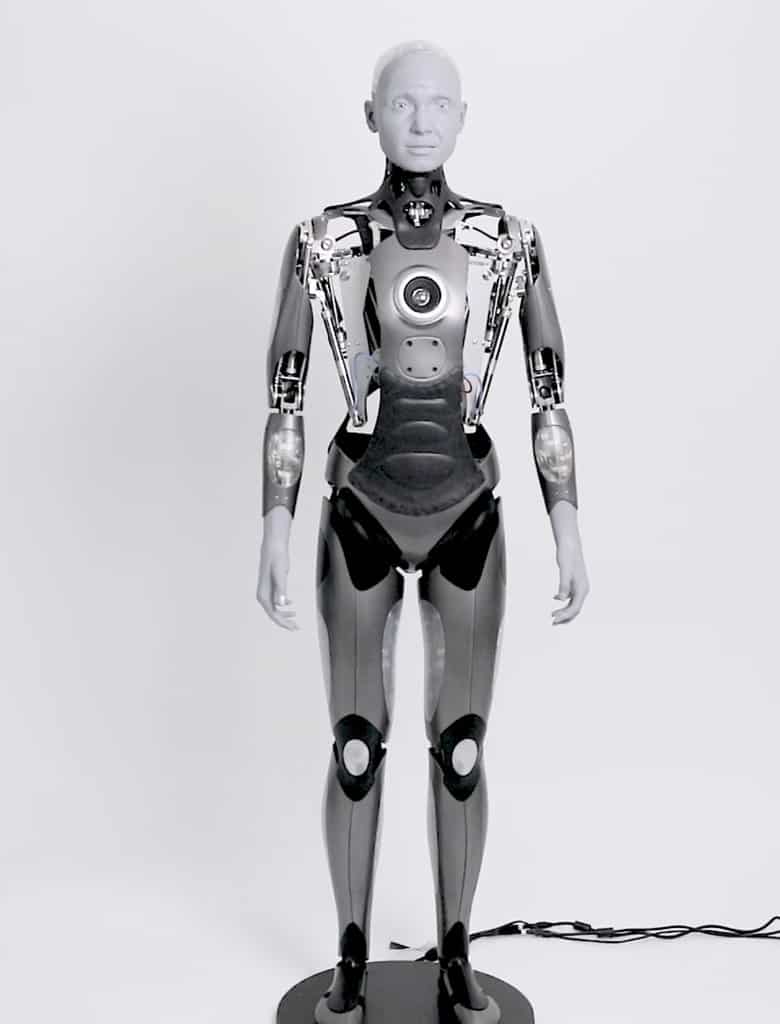
Ameca Robot
Engineered Arts - Ameca Robot
Ameca is an innovative humanoid robot that showcases a strikingly realistic design, closely resembling human features. Known for its lifelike facial expressions and smooth movements, it is ideal for applications in research, entertainment, and public demonstrations. The robot's advanced facial architecture combines servo motors and pneumatic actuators, enabling it to effectively convey a wide range of human emotions, enhancing its interactions in social contexts. Its AI-driven system features cutting-edge speech recognition and natural language processing, allowing for real-time conversations with users. The modular design of Ameca permits easy hardware and software upgrades, ensuring adaptability as technology advances. With articulated limbs providing a natural range of motion, Ameca can perform tasks with remarkable dexterity. Serving as a research platform, it explores the evolving dynamics of human-robot interaction, paving the way for enhanced integration of robots in daily life.

Height: 168 cm
Weight: 60 kg
Speed: 5 km/h
Payload: 10 kg
Degrees of freedom: 20
Autonomy Level: Semi-autonomous

Motors: Servo and pneumatic actuators
Battery: 1.5 kWh
Runtime: 8 hours per charge
Cameras: Dual high-definition cameras
Sensors: Tactile and proximity sensors
Software: Virtual Robot & Tritium
Safety: Emergency stop and obstacle detection
Material: Lightweight composites and metals

Atlas Robot
Boston Dynamics - Atlas Robot
Atlas is a groundbreaking humanoid robot designed to exhibit exceptional agility and strength, allowing it to navigate complex environments effortlessly. Known for its impressive dynamic movements, Atlas can perform advanced parkour maneuvers, showcasing its versatility in various scenarios. Equipped with an extensive suite of sensors, it can perceive and adapt to its surroundings, maintaining balance even on uneven terrain. Powered by hydraulic actuators, Atlas can execute a range of tasks, from walking and running to jumping and climbing, making it ideal for applications in search and rescue, disaster response, and outdoor exploration. The robot's advanced AI processes visual and spatial data in real-time, enabling autonomous actions such as opening doors and carrying objects. Its modular design allows for easy upgrades, ensuring Atlas remains at the forefront of robotics research. This innovation platform demonstrates the future potential of humanoid robots in enhancing human capabilities across multiple industries.

Height: 175 cm
Weight: 80 kg
Speed: 8 km/h
Payload: 11 kg
Degrees of freedom: 28
Autonomy Level: Semi-autonomous

Motors: Hydraulic actuators
Battery: Lithium-ion rechargeable
Runtime: 90 minutes per charge
Cameras: Stereo camera system
Sensors: LIDAR, IMU, and depth sensors
Software: Custom AI for navigation and manipulation
Safety: Collision detection and emergency stop
Material: Aluminum and composite materials

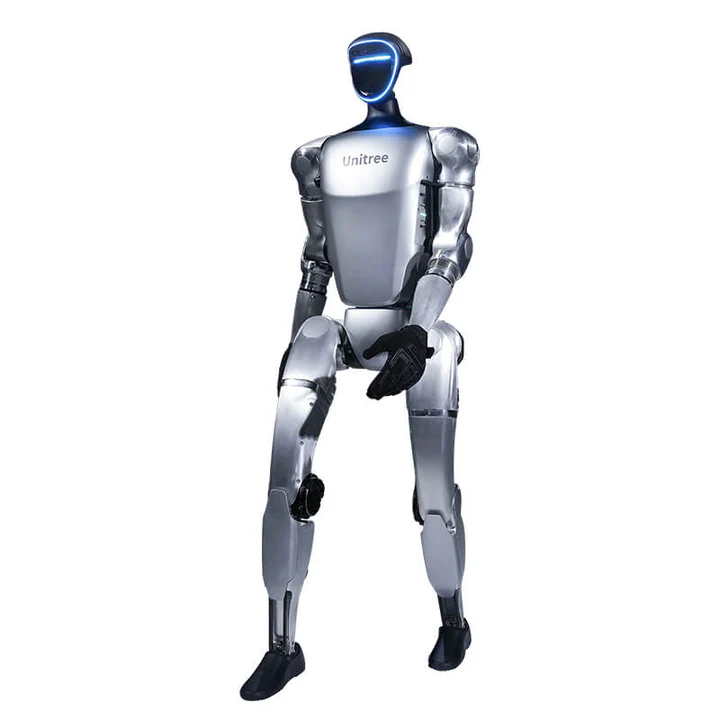
Unitree Robot
Unitree Robotics - G1 Robot
The Unitree Robotics G1 Robot is a cutting-edge humanoid designed for versatility and high performance in various applications, including research, surveillance, and entertainment. Standing at 127 cm tall, it features a lightweight frame of 35 kg, ensuring ease of mobility while maintaining robustness. The G1 is equipped with 13 motors that provide precise control over its limbs, allowing for fluid movements such as walking, running, and climbing stairs. Advanced AI algorithms empower the robot with autonomous navigation, enabling it to map its environment and avoid obstacles in real-time. Its ability to recognize and respond to human commands facilitates seamless interaction, enhancing user experience. Unitree Robotics aims to make robotics accessible, and the G1 serves as an affordable platform that encourages exploration in diverse fields, from education to industrial automation.

Height: 127 cm
Weight: 35 kg
Speed: 3.5 km/h
Payload: 5 kg
Degrees of freedom: 12
Autonomy Level: Fully autonomous

Motors: 13
Battery: 1.2 kWh
Runtime: 4 hours per charge
Cameras: 1 front-facing camera
Sensors: LIDAR, IMU, and ultrasonic sensors
Software: Proprietary AI for navigation
Safety: Collision detection and emergency stop
Material: Aluminum and reinforced plastics

Agibot Robot
Agibot - Agibot Yuanzheng A2
The Agibot Yuanzheng A2 is a versatile humanoid robot tailored for a variety of applications, including logistics, education, and healthcare. Its compact design allows it to operate efficiently in confined spaces, making it an ideal choice for urban environments and warehouses. With advanced artificial intelligence capabilities, this robot can learn from interactions and adapt to new tasks, continually improving its performance through machine learning algorithms. It features natural language processing, enabling seamless communication with users and making it effective in customer service roles. The articulated limbs of the Agibot Yuanzheng A2 provide a broad range of motion, allowing it to lift, sort, and assemble items with precision. As a cutting-edge solution in humanoid robotics, the Agibot Yuanzheng A2 showcases the potential for enhancing productivity and efficiency across various sectors, paving the way for innovative applications in automation and beyond.

Height: 160 cm
Weight: 45 kg
Speed: 3 km/h
Payload: 10 kg
Degrees of freedom: 20
Autonomy Level: Semi-autonomous

Motors: 12
Battery: 24V lithium-ion
Runtime: 8 hours
Cameras: 2
Sensors: Lidar, ultrasonic sensors, touch sensors
Software: Agibot AI SDK
Safety: Emergency stop, collision detection
Material: Aluminum alloy, ABS plastic

UBTech Robot
UBTech - S1 Walker Robot
The UBTech S1 Walker Robot is a state-of-the-art humanoid robot designed for a wide range of applications, from education to personal assistance. With a focus on mobility and interaction, the S1 Walker combines advanced robotics and artificial intelligence to navigate complex environments seamlessly. It features a human-like appearance and is equipped with sophisticated sensors that allow it to perceive and interact with its surroundings effectively. The S1 can perform tasks such as walking, climbing stairs, and responding to voice commands, making it a versatile companion in various settings. Its ability to learn from interactions and adapt to new tasks enhances its functionality, positioning it as an innovative solution in the realm of humanoid robotics. Additionally, the robot's engaging interface fosters meaningful communication, enabling it to assist users in daily activities while enhancing the overall user experience.

Height: 130 cm
Weight: 30 kg
Speed: 1.5 km/h
Payload: 5 kg
Degrees of freedom: 20
Autonomy Level: Fully Autonomous

Motors: 12
Battery: 24V Lithium-ion
Runtime: 4 hours
Cameras: 2
Sensors: 10 (including LIDAR and ultrasonic sensors)
Software: UBTech proprietary AI software
Safety: Obstacle detection and avoidance
Material: Aluminum alloy and plastic

Engineai SE01 Robot
EngineAI - SE01 Robot
EngineAI’s SE01 Robot is a humanoid robot built for versatile applications in service, logistics, and education. This robot combines agility and precision, allowing it to carry out a range of tasks effectively. Designed with advanced AI, SE01 can interact through natural language processing, making it suitable for customer service, education, and more complex tasks in collaborative environments. With a set of high-torque motors, the SE01 can handle delicate items and perform repetitive tasks with precision. The robot is equipped with robust navigation capabilities, allowing it to maneuver around obstacles, recognize objects, and perform tasks with minimal supervision. Additionally, its modular build allows easy customization and integration of future upgrades, enhancing its longevity and adaptability in various industries. EngineAI’s SE01 is designed with safety measures, including advanced sensors to detect and avoid collisions, making it safe to operate alongside human workers.

Height: 160 cm
Weight: 65 kg
Speed: 5 km/h
Payload: 20 kg
Degrees of freedom: 32
Autonomy Level: Semi-autonomous

Motors: 18
Battery: 3 kWh
Runtime: 8 hours
Cameras: Dual HD vision
Sensors: LiDAR, ultrasonic, IMU, depth sensors
Software: Proprietary AI-driven operating system
Safety: Collision avoidance, human proximity sensors
Material: Reinforced alloy and polymer

XPENG Iron Robot
Xpeng - Iron Robot
Xpeng's Iron humanoid robot exemplifies cutting-edge advancements in robotics and AI, designed to enhance productivity in various sectors. Powered by the proprietary Turing AI chip, Iron demonstrates remarkable cognitive abilities, enabling it to "think" and adapt to complex tasks. This humanoid robot is already operational, assisting in production lines by assembling electric vehicles, and is poised to extend its capabilities to retail, office, and home environments. With highly articulated limbs and an advanced vision system, Iron can navigate diverse environments, perform intricate manual operations, and interact seamlessly with humans. Its sleek, human-like design is optimized for functionality, making it a versatile tool for industrial and personal applications.

Height: 178 cm
Weight: 70 kg
Speed: 6 km/h
Payload: 15 kg
Degrees of freedom: 60
Autonomy Level: Semi-autonomous

Motors: High-torque, quantity unspecified
Battery: Lithium-ion, capacity unspecified
Runtime: 8 hours
Cameras: Dual image signal processors
Sensors: Multi-modal including vision and tactile
Software: Proprietary AIOS
Safety: Human interaction protocols
Material: Lightweight composite

LIMX Cosa Robot
Limx - Cosa Robot
Xpeng's Iron humanoid robot exemplifies cutting-edge advancements in robotics and AI, designed to enhance productivity in various sectors. Powered by the proprietary Turing AI chip, Iron demonstrates remarkable cognitive abilities, enabling it to "think" and adapt to complex tasks. This humanoid robot is already operational, assisting in production lines by assembling electric vehicles, and is poised to extend its capabilities to retail, office, and home environments. With highly articulated limbs and an advanced vision system, Iron can navigate diverse environments, perform intricate manual operations, and interact seamlessly with humans. Its sleek, human-like design is optimized for functionality, making it a versatile tool for industrial and personal applications.

Height: 178 cm
Weight: 70 kg
Speed: 6 km/h
Payload: 15 kg
Degrees of freedom: 60
Autonomy Level: Semi-autonomous

Motors: High-torque, quantity unspecified
Battery: Lithium-ion, capacity unspecified
Runtime: 8 hours
Cameras: Dual image signal processors
Sensors: Multi-modal including vision and tactile
Software: Proprietary AIOS
Safety: Human interaction protocols
Material: Lightweight composite